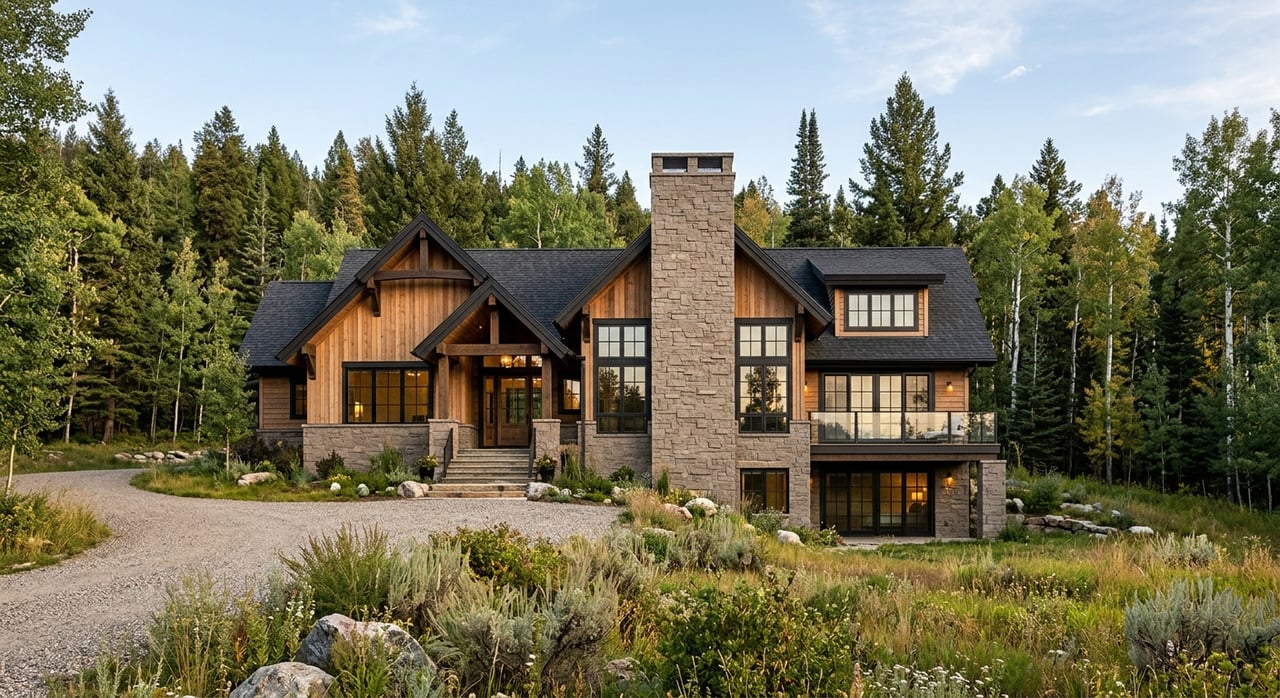
Wondering if Gallatin Gateway gives you the Montana lifestyle you want without feeling too far from everything you need? That is a fair question, because this area offers a very specific kind of living. If you are considering a move here, understanding the setting, housing patterns, commute reality, and property tradeoffs can help you decide with confidence. Let’s dive in.
Gallatin Gateway at a Glance
Gallatin Gateway is best understood as a rural residential corridor with a small historic core, not a typical suburb. County planning documents describe a downtown area around Mill Street and Highway 191, while the broader Gateway area is shaped by agricultural land, the Gallatin River, wildlife habitat, open space, and a strong rural identity.
At the same time, local planning work from 2023 notes that many residents now see Gateway as increasingly functioning like a bedroom community tied to Big Sky. That means you get a place that feels scenic and low-density, while still being connected to larger work and service hubs nearby.
Who Gallatin Gateway Usually Fits Best
If you picture home as a quieter setting with bigger views, more land, and a little breathing room, Gallatin Gateway may feel like a strong match. The area tends to appeal to buyers who want a rural lifestyle while staying within reach of Bozeman-area jobs, services, and Big Sky recreation.
This can be especially attractive if you are relocating and want something that feels distinctly Montana rather than conventionally suburban. You may also like Gateway if you value open skies, secondary roads used for walking or biking, and a setting where recreation is part of everyday life.
Good fit for lifestyle-focused buyers
Gallatin Gateway may be a good fit if you want:
- A rural feel rather than a master-planned neighborhood
- Larger lots or acreage opportunities
- Scenic surroundings with working land nearby
- Access to Highway 191 for travel north toward Bozeman or south toward Big Sky
- A setting that balances privacy with regional connectivity
Less ideal for convenience-first buyers
Gallatin Gateway may be less ideal if you want:
- Short, simple errand runs
- A highly uniform residential setting
- Minimal dependence on a main highway
- A neighborhood environment made up only of homes
County planning documents make clear that this is a mixed rural environment. In addition to homes and farms, the area can include home-based businesses, light commercial uses, manufacturing uses, and gravel pits.
The Setting: Scenic, Rural, and Functional
One of the biggest reasons buyers consider Gallatin Gateway is the setting itself. The area is known for agricultural landscapes, river corridors, wildlife habitat, and a rural lifestyle that still feels tied to the wider Gallatin Valley.
That balance matters. Gateway is not purely remote, and it is not a polished suburban pocket either. It is better described as scenic and functional, with daily life often shaped by land, weather, roadway access, and parcel-specific features.
Mill Street versus the wider rural area
There is an important difference between the historic core and the surrounding countryside. The practical center of town is around Mill Street and nearby Highway 191, where county planning documents place the elementary school, fire station, community center, post office, businesses, and homes.
Outside that core, the broader Gallatin Gateway area becomes much more rural in character. That is where you see more large lots, agricultural uses, scattered subdivisions, and a wider range of property types.
What Homesites and Land Patterns Look Like
If you are comparing Gallatin Gateway to neighborhoods in Bozeman or Belgrade, the housing pattern will likely feel very different. County planning documents describe a mix of subdivision development, Certificate of Survey parcels, working farms, residential neighborhoods, and some non-residential rural uses.
Recent county interviews also describe the built pattern as scattered and, at times, haphazard. Some newer projects have added density along Highway 191, while other areas still reflect larger agricultural tracts and more spread-out rural homes.
Expect variety, not uniformity
In Gallatin Gateway, one road can feel very different from the next. Some subdivisions include lots in the roughly five- to 20-acre range, while other properties are part of much larger ranch tracts.
That variety can be a plus if you want options. It also means you will want to evaluate each property on its own terms instead of assuming the surrounding area follows one standard pattern.
Commute Reality: Connected, but Not Friction-Free
Highway 191 is the main transportation spine through Gallatin Gateway. County documents note that it connects the area south to Big Sky and Yellowstone National Park, and north and east to Bozeman, Belgrade, and the interstate.
On paper, that location is a major advantage. Travel estimates place Gallatin Gateway about 13 miles and 17 minutes from Bozeman, and about 31.5 miles and 38 minutes from Big Sky by car.
Traffic is part of the equation
The tradeoff is that local residents have raised concerns about peak-period traffic on U.S. 191. According to the 2023 county situation assessment, morning and afternoon commute windows can make turning in and out of Gateway more difficult, especially with Big Sky-bound traffic.
So if your ideal move depends on an easy, low-stress daily drive, this is worth thinking through carefully. A map may show a manageable distance, but your experience can vary depending on the time of day and where your property sits along the corridor.
Transit option to know
There is also a bus connection in the area. Route information shows a Gallatin Gateway Inn stop on the Bozeman-Big Sky Link, and travel estimates show a bus option between Gallatin Gateway Inn and Big Sky Town Center at about 55 minutes.
Daily Life and Convenience
Daily life in Gallatin Gateway is often shaped more by planning ahead than by quick suburban convenience. The area works well for many buyers because it offers a quieter home base while still keeping Bozeman and Big Sky within reach.
That said, if you are used to having many services around the corner, Gateway may feel different. This is one of those places where lifestyle fit matters just as much as home size or price point.
School Considerations to Verify
Gallatin Gateway School is the local public K-8 school and is located at 100 Mill Street. The school reports serving an average of about 150 students per year and has been part of the community for well over a century.
County school district information also identifies nearby public district options in Bozeman, Monforton, Belgrade, and Big Sky, including Big Sky’s K-12 district. Because assignment can depend on the parcel, buyers should verify school service details directly for any property they are considering.
Why due diligence matters here
The county plan notes several site-related constraints at the local school, including limited room for expansion, building-code constraints in the original building, well and septic capacity concerns, and playground-space needs if enrollment rises. For buyers who are weighing long-term fit, this makes school-related due diligence especially important.
Property Risks to Think About Before You Buy
In Gallatin Gateway, parcel-level details matter. A beautiful setting can come with real-world considerations that affect how you use a property, build on it, insure it, or maintain it over time.
County planning documents highlight several issues buyers should pay close attention to, especially for acreage or river-adjacent property.
Key land considerations
Before buying, be sure to evaluate:
- Floodplain conditions, especially on parcels west of the Gallatin River
- Riparian habitat considerations near river corridors
- Access and road practicality
- Wildfire exposure, since the entire planning jurisdiction is in the Wildland-Urban Interface
- Existing well and septic setup where applicable
These are not reasons to avoid the area. They are reasons to go in with clear expectations and solid local guidance.
Questions to Ask Yourself
If you are still deciding whether Gallatin Gateway is the right fit, it helps to step back and think about your day-to-day priorities. The right answer often comes down to how you want your home to feel and what tradeoffs you are comfortable making.
Ask yourself:
- Do you want a rural setting more than a suburban one?
- Would larger lots or open space improve your quality of life?
- Are you comfortable with a highway-based commute?
- Do you enjoy a working rural environment, not just a residential one?
- Are you prepared to evaluate land-specific issues like floodplain or wildfire exposure?
If you answered yes to most of these, Gallatin Gateway may be a strong lifestyle match.
The Bottom Line on Gallatin Gateway
Gallatin Gateway can be a great fit if you want a scenic, quieter, more rural home base that still connects you to Bozeman and Big Sky. It stands out for its open land, mixed property types, historic core, and everyday access to Montana landscapes that many buyers are actively seeking.
The key is to understand what it is and what it is not. This is not a one-size-fits-all suburb. It is a rural community with character, tradeoffs, and a strong sense of place, which is exactly why the right buyers are drawn to it.
If you want help comparing Gallatin Gateway to other Gallatin Valley areas or narrowing down properties that fit your goals, reach out to Kelley Schlauch. She brings local perspective, clear guidance, and a thoughtful approach to helping you find the right Montana fit.
FAQs
Is Gallatin Gateway a suburb of Bozeman?
- Not in the typical sense. County planning documents describe Gallatin Gateway as a rural residential corridor with a small historic core rather than a conventional suburb.
How far is Gallatin Gateway from Bozeman?
- Travel estimates place Gallatin Gateway about 13 miles and roughly 17 minutes from Bozeman by car, depending on route and traffic conditions.
How far is Gallatin Gateway from Big Sky?
- Travel estimates place Gallatin Gateway about 31.5 miles and roughly 38 minutes from Big Sky by car, though traffic on U.S. 191 can affect drive times.
What kind of properties are common in Gallatin Gateway?
- The area includes a mix of large-lot subdivisions, Certificate of Survey parcels, working farms, residential neighborhoods, and some mixed rural uses.
What should buyers check before purchasing land in Gallatin Gateway?
- Buyers should closely review parcel-specific factors like floodplain location, riparian habitat, access, wildfire exposure, and well and septic conditions where applicable.
What school serves Gallatin Gateway properties?
- Gallatin Gateway School is the local public K-8 school at 100 Mill Street, but buyers should verify school assignment and options by parcel.